

 Back to All
Sponsored Content
Hydropower has been producing reliable renewable energy for over a century, and many plants around the world continue to operate with equipment that dates back decades. While this longevity is a strength, it also creates challenges: older drawings and records are sometimes incomplete or missing, and mechanical systems need to adapt to new operating demands, safety requirements, and efficiency expectations.
With an increasing focus on the refurbishment of ageing Hydropower equipment, reverse engineering of components is proving a valuable approach to strategic modernization of hydropower assets. This work allows operators to keep older plants productive, cost-effective, and safe, without always resorting to full replanting of a turbine.
REVERSE ENGINEERING VALIDATED BY COMPUTATIONAL FLUID DYNAMICS (CFD)
When components wear out in older plants, replacement is not always straightforward. Despite Gilkes extensive archive of original turbine drawings and schedules, there are occasions where original drawings may no longer exist, or the components originate from manufacturers that have closed or merged. In these cases, reverse engineering offers a way forward.
In a recent project led by Analysis Engineer Joe Boothroyd, Gilkes tested this process on a Francis runner refurbishment at Loch Mannoch Hydro Plant in Scotland. The aim of the project was to understand how accurate the reverse engineering process of Francis runners can be, and how effective computational fluid dynamics (CFD) is for understanding any hydraulic performance loss throughout the process.
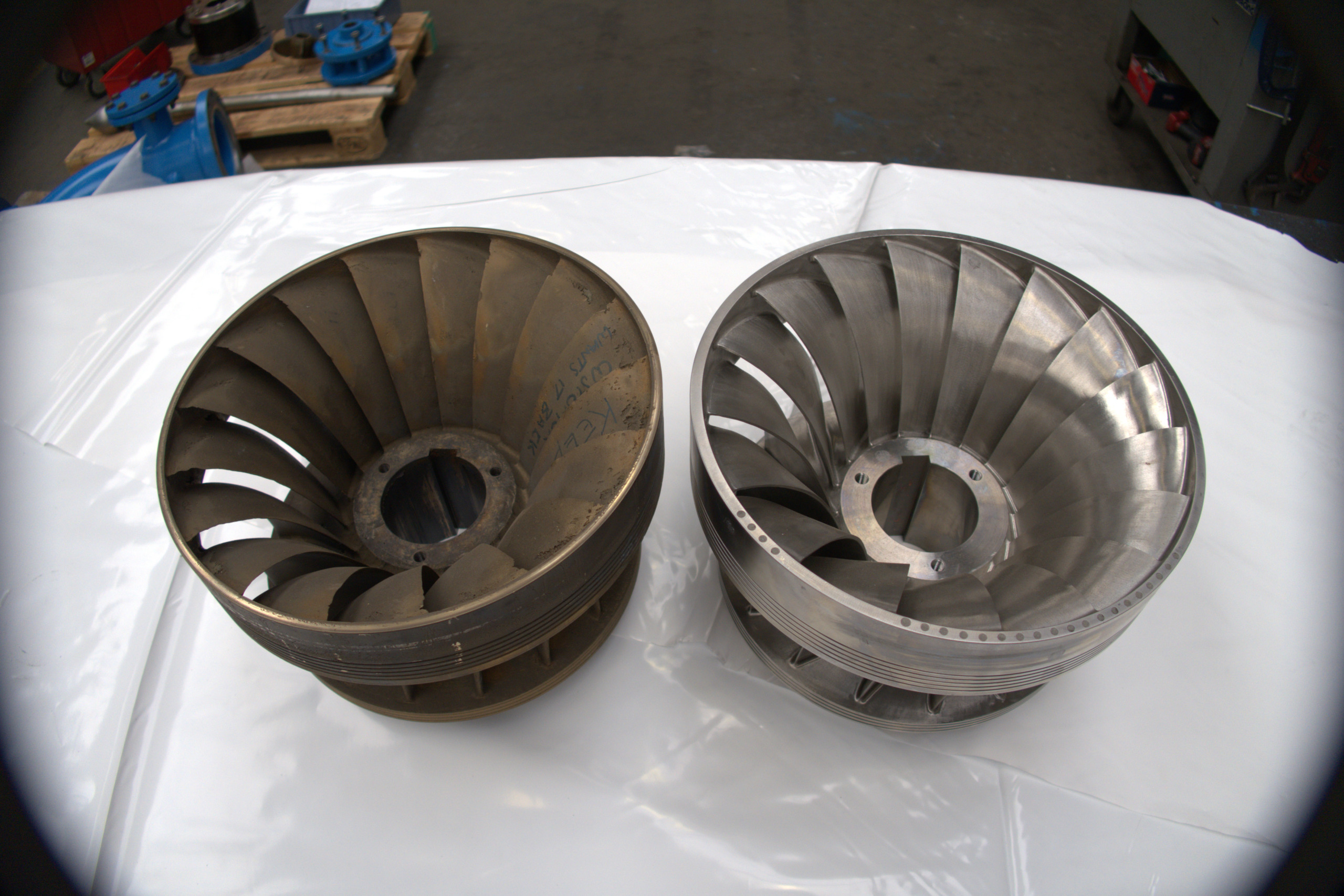
A side-by-side comparison of the old (left) and new (right) runners from Loch Mannoch.
Using the Loch Mannoch Francis runner refurbishment as a case study, the team compared:
- A CAD model based on the original design information.
- A CAD model created by 3D scanning a newly manufactured runner.
- Computational Fluid Dynamics (CFD) simulations of both models. The CFD model was validated against the turbines original model test data
The results showed a difference in hydraulic performance of just 0.36% between the original and reverse-engineered runners, demonstrating that a well-executed reverse engineering process can deliver near-identical performance.
For operators, this work demonstrates that even when drawings are missing, there is the ability to regenerate high-performance hydro components from physical scans, confidently bridging the gap between legacy designs and modern manufacturing. This reduces downtime, avoids the risks of unverified copies, and ensures equipment continues to run as designed.
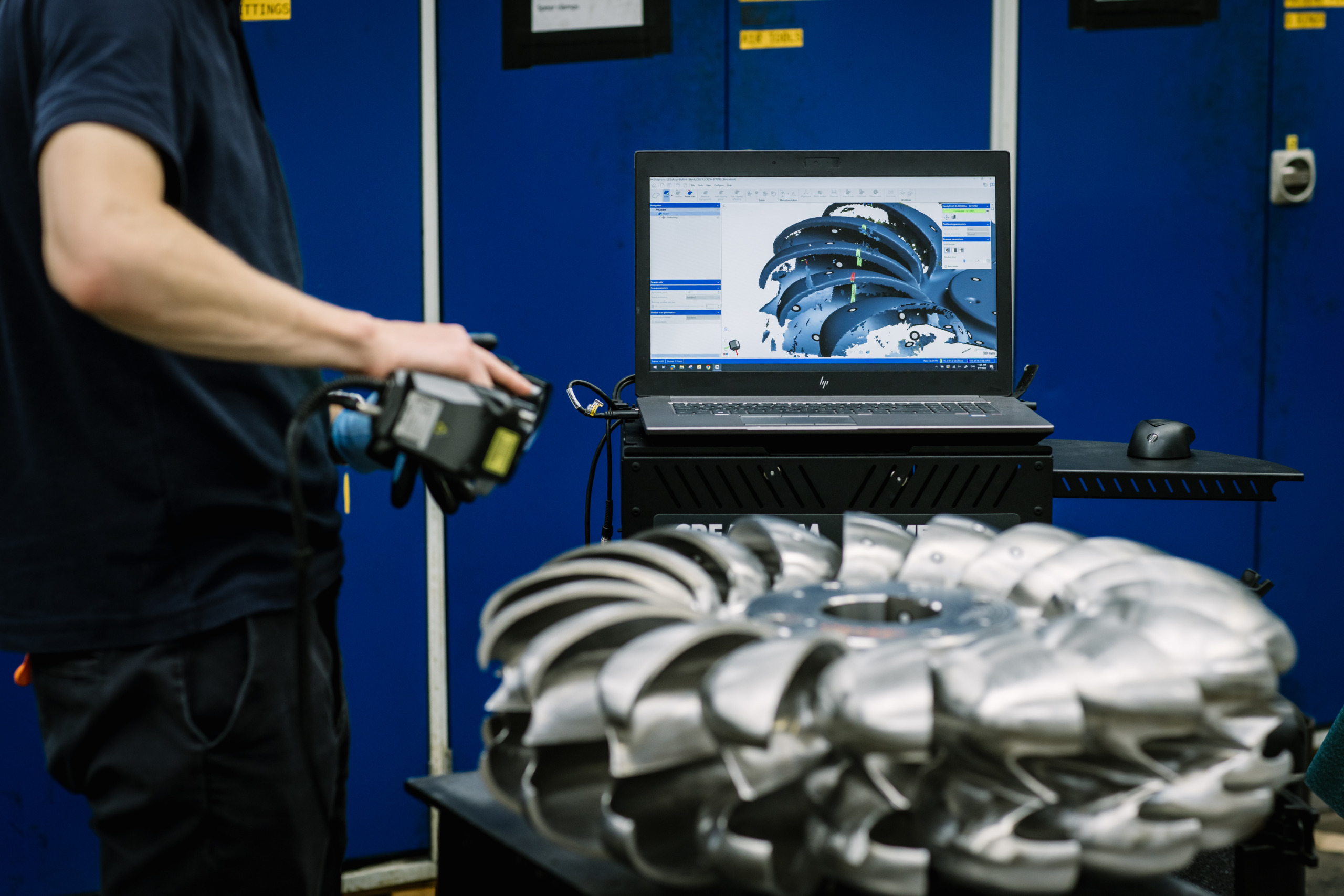
A close-up of the laser scanning process.
EXTENDING ASSET LIFESPAN OF HYDROPOWER ASSETS
While refurbishment addresses immediate mechanical needs, modernization looks at the plant as a whole and how it can be adapted for today’s requirements. Many hydropower stations were built in a different regulatory and operating environment. Modernization is crucial for maximizing the plant’s lifespan and ensuring reliable and sustainable generation.
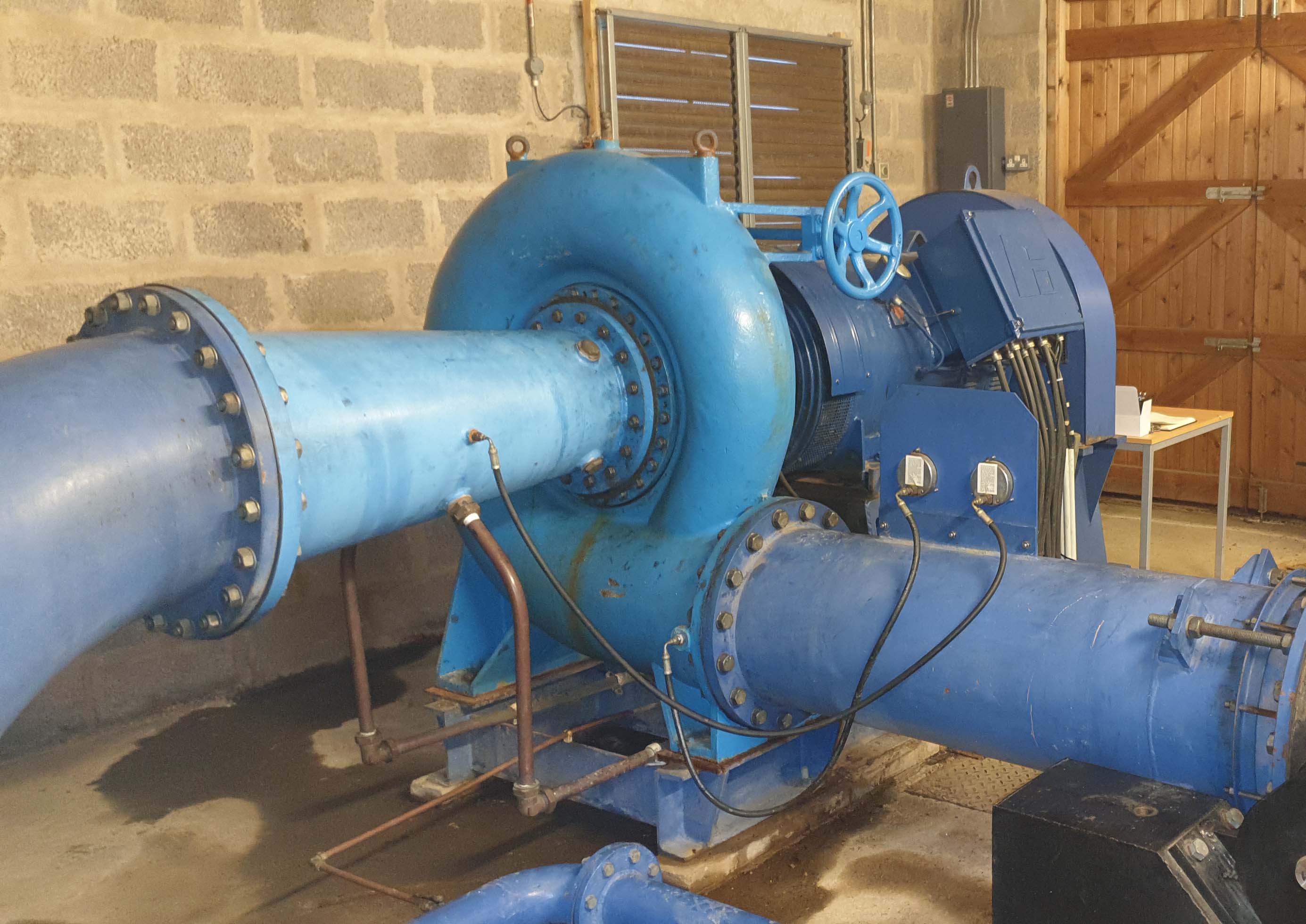
The Loch Mannoch turbine before refurbishment.
A HOLISTIC APPROACH TO REVITALIZATION
Gilkes begins with comprehensive hydropower assessments, grounded in decades of technical experience across design, maintenance, and repair. Whatever the age of a facility, the first step to extending its lifespan is a consultation, site survey, or full condition assessment.
From this foundation, their services cover:
- Refurbishment: Renewing worn components, or reverse-engineering replacements via 3D scanning when drawings are unavailable, to rejuvenate installations.
- Modernization: Upgrading mechanical governors to digital systems, automating controls, enhancing turbine and generator performance, and reducing maintenance costs while aligning with safety and compliance standards
- Turbine Replanting: Complete replacements when existing assets no longer meet site demands, offering enhanced designs, resilience, and future proofing under evolving energy scenarios such as increased demand for power or change in grid constraints.
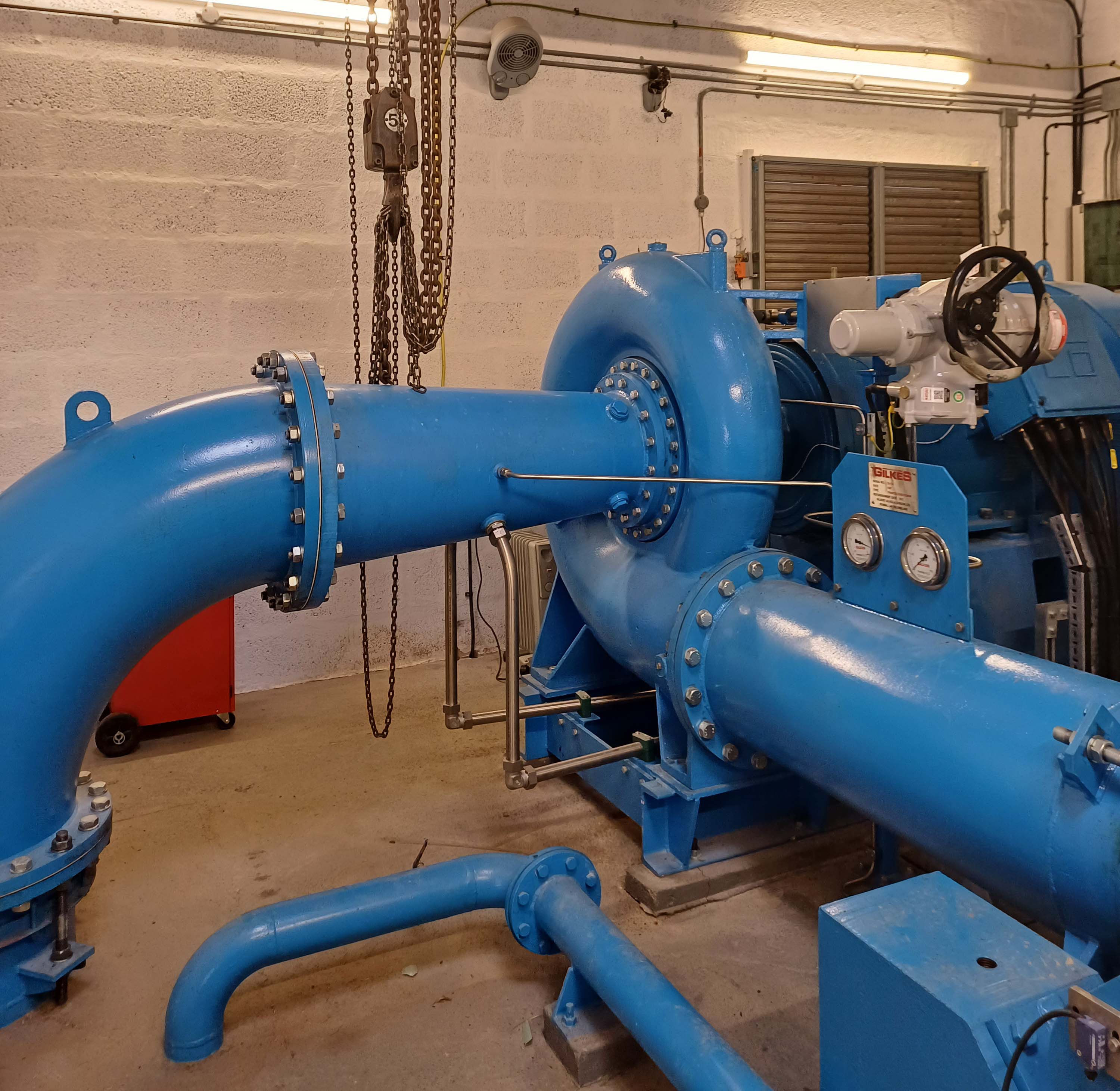
The Loch Mannoch turbine after refurbishment.
MONITORING FOR RELIABILITY
In addition to refurbishment and modernization, continuous monitoring plays an increasingly vital role in keeping assets performing at their best. Gilkes’s HydroView is designed to provide secure monitoring solutions, delivering real-time oversight, diagnostics, and updates.
Remote monitoring helps operators identify issues before they become critical, reducing both downtime and repair costs, and giving greater control over operations. It is particularly valuable for small and remote stations, where sending staff on site is expensive and time-consuming.
REVERSE ENGINEERING MEETS MODERNIZATION
Combined, these competencies of reverse engineering and other modernization techniques help hydropower asset owners restore, adapt, and improve their systems to meet current and future demands, maximizing productivity, and longevity.
- Accurate Replication: Facilities lacking original drawings can still receive new, effectively identical runners via the validated scanning + CFD approach.
- Cost-Efficient Upgrades: Refurbishment using reverse-engineered components avoids full-scale replanting where unnecessary, reducing expenditure while enhancing performance.
- Resilient Longevity: Outdated assets can be revived with digital governors, reconditioned components, and enhanced control strategies—without compromising heritage integrity.
- Remote Reliability: Through HydroView, operations benefit from continuous monitoring and quick-response support. Critical for remote hydro sites.
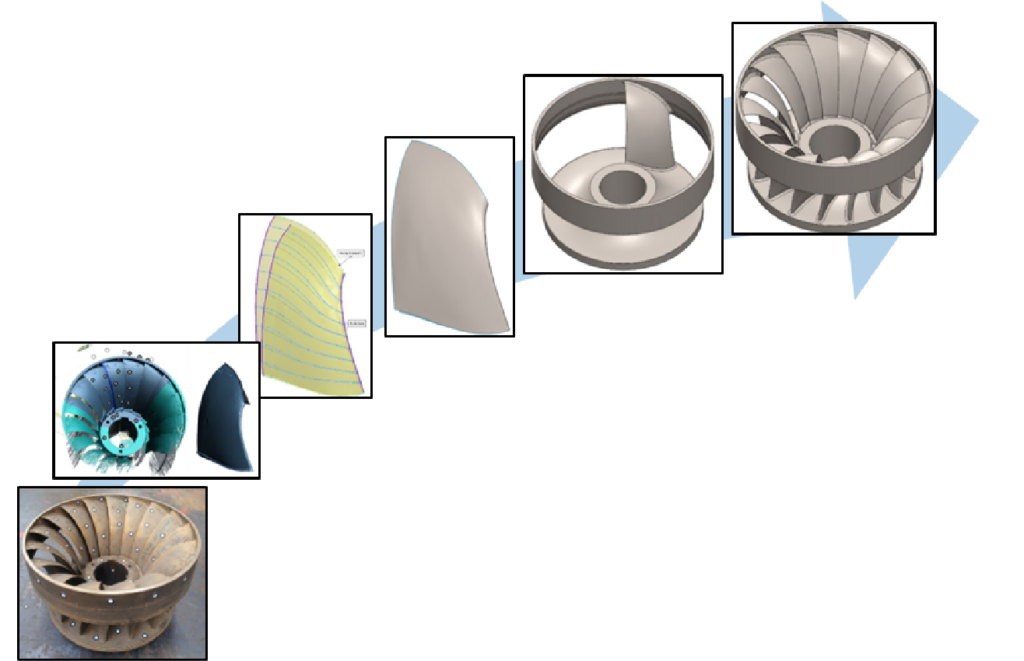
A visualization of the scanning process, starting from the initial scan – bottom left.
BROADER IMPLICATIONS FOR THE INDUSTRY
The combination of these approaches offers several cost saving benefits for the hydropower sector:
- Preserving older plants: Many facilities are historic and were built in remote locations. These techniques allow them to keep generating without major civil works.
- Cost efficiency: Refurbishment and targeted upgrades are more affordable than full replacement.
- Sustainability: Extending the life of equipment avoids unnecessary use of new materials and makes the most of existing infrastructure.
- Operational resilience: Modern controls and monitoring reduce the risk of unexpected failures and improve response to grid demands.
POWERING A MORE RELIABLE ENERGY FUTURE
Modern engineering techniques can faithfully reproduce historic turbine designs even when original documentation is missing.
Gilkes’s precision-driven reverse engineering, validated through CFD, combined with forward-looking modernization services, allows worn or undocumented components to be accurately reproduced while modernization brings plants into line with current expectations for performance, safety, and monitoring. Together, these approaches give operators the tools to extend the life of their assets while preparing them for the future.
For an industry that is both mature and essential to renewable energy supply, these practical strategies are not just options, they are necessary steps to keep hydropower contributing for decades to come.
FURTHER READING
Read more about the Loch Mannoch refurbishment work as part of a wider modernization program on the Forrest Estate in Scotland. https://www.gilkes.com/case-studies/forrest-estate/

