
 Back to All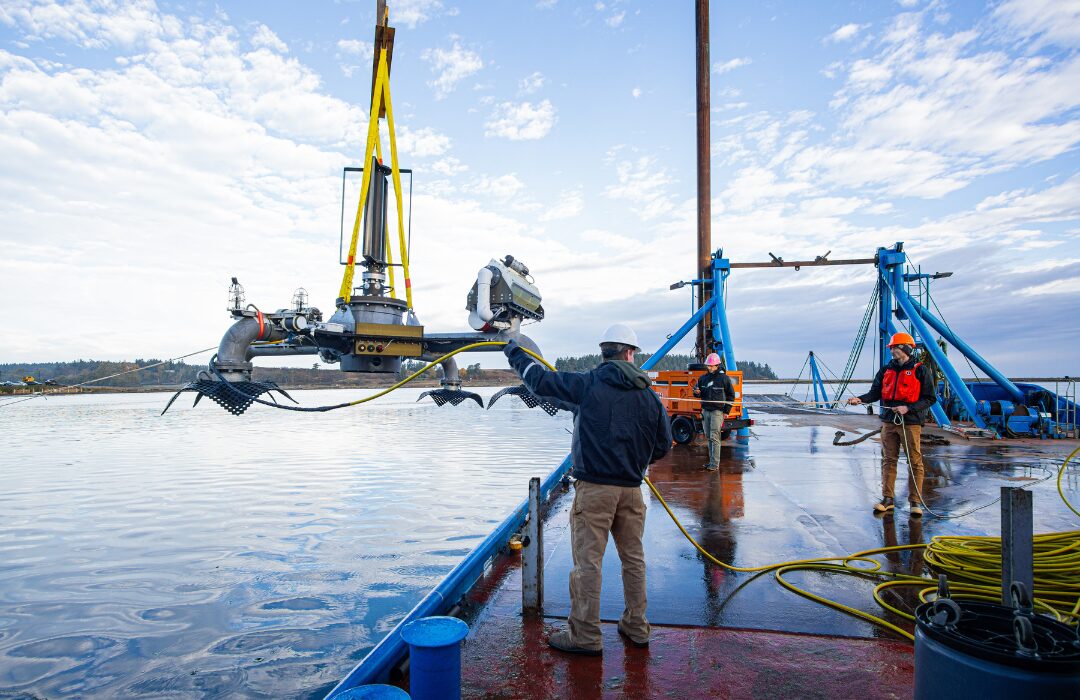
Editor’s note: For a snapshot of the National Marine Energy Centers, take a look at the infographic HERE.
The marine environment holds an enormous, abundant energy supply—from the steady pull of tides to the power of waves. But turning these natural forces into reliable, grid-ready electricity requires something more: public infrastructure that helps de-risk innovation, training the next generation of engineers, and connecting regional expertise to national goals.
That’s exactly the role played by the National Marine Energy Centers (NMECs).
Created through Congressional authorization in the Energy Independence and Security Act of 2007, and supported by the U.S. Department of Energy’s Water Power Technologies Office, the NMECs are university-based research hubs that form the backbone of U.S. marine energy R&D. Each center provides open-access testing facilities, builds regional partnerships, and develops talent pipelines that feed directly into the growing ocean economy.
There are currently four NMECs, each located in a different coastal region of the country and focused on the unique marine energy resources and technology needs of their area:
- Atlantic Marine Energy Center (AMEC) – focuses on marine energy research and technology development in estuarine, tidal, and wave environments along the Atlantic seaboard, with an emphasis on enhancing energy resilience and powering the blue economy.
- Hawai‘i Marine Energy Center (HMEC) – specializes in wave energy and ocean thermal energy conversion (OTEC). The center’s location in the Pacific offers year-round access to consistent ocean resources, making it ideal for long-duration marine energy deployments and tropical applications.
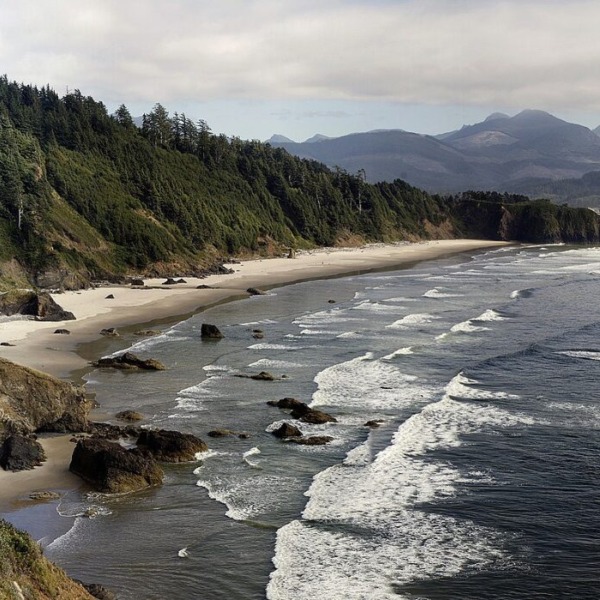
- Pacific Marine Energy Center (PMEC) – supports wave, tidal, and river energy research and is home to the nation’s first full-scale, grid-connected, open-ocean wave energy test site: PacWave South, located off the Oregon coast.
- Southeast National Marine Renewable Energy Center (SNMREC) – focuses on the development of ocean current energy, particularly from the nearby Gulf Stream. It also supports wave energy research and offshore sensing systems—offering infrastructure and data services that help move technologies from concept to ocean trial.
Together, these four centers make up a national testbed for marine energy innovation. By anchoring research infrastructure at trusted academic institutions, the NMECs provide critical public benefits: lowering the cost and risk of technology development, connecting federal R&D investment to regional economies, and helping the U.S. compete in the global marine energy race.
Below, you will find deeper dive information into each of the NMECs, from background information, available facilities, notable alumni, and their regional partnerships.
To learn more about the centers, follow the links below:
- Atlantic Marine Energy Center
- Hawai‘i Marine Energy Center
- Pacific Marine Energy Center
- Southeast National Renewable Energy Center
Atlantic Marine Energy Center (AMEC)
Launched in 2021, the Atlantic Marine Energy Center is a university-led consortium managed by the University of New Hampshire (UNH), with key partners at Stony Brook University, Lehigh University, and the Coastal Studies Institute in North Carolina. AMEC was created through DOE’s “Marine Energy Foundational Research and Testing Infrastructure” funding opportunity and is the newest addition to the NMEC network.
AMEC operates more than 40 facilities, ranging from wave tanks and electrical engineering labs to open-water test sites and research vessels. Its real-world ocean test sites include the Jennette’s Pier test site in North Carolina for wave energy testing, and the Tidal Energy Test Site in Portsmouth, New Hampshire for grid-connected tidal turbine testing. Specialized labs across partner campuses support work in microgrids, turbulence analysis, numerical modeling, environmental sensing, and device design.
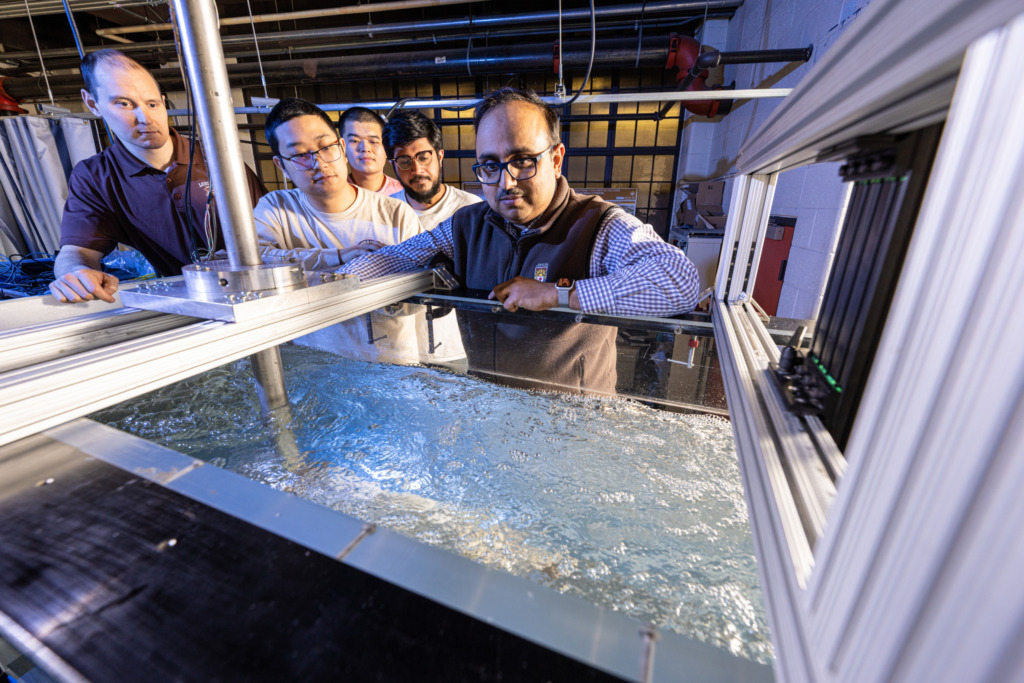
Prof. Arindam Banerjee (co-director, AMEC) with his graduate students at the Tidal Turbulence Test Facility at Packard Laboratory, Department of Mechanical Engineering & Mechanics, Lehigh University. The facility houses the active grid turbulence generator, the first of its kind in a water-tunnel facility in the U.S., that allows researchers to generate site-specific free stream turbulence observed at high energy tidal test sites.
Several AMEC alumni have launched marine-focused businesses, such as Landon Mackey (WaterBros), Kevin Flora (H2Flo Consulting), and Will Moore, Cam Vose and Kara Wittmann (Drift Marine Systems).
Students at AMEC benefit from an interdisciplinary curriculum and hands-on learning environments that reflect industry needs. Courses include topics such as marine energy systems, ocean hydrodynamics, ocean instrumentation, and ocean structures, while senior electives focus on applied design and commercial viability. With sites across multiple states, AMEC gives students access to varied marine environments, helping them become agile, solutions-driven professionals ready to support marine energy development along the Atlantic seaboard and beyond.
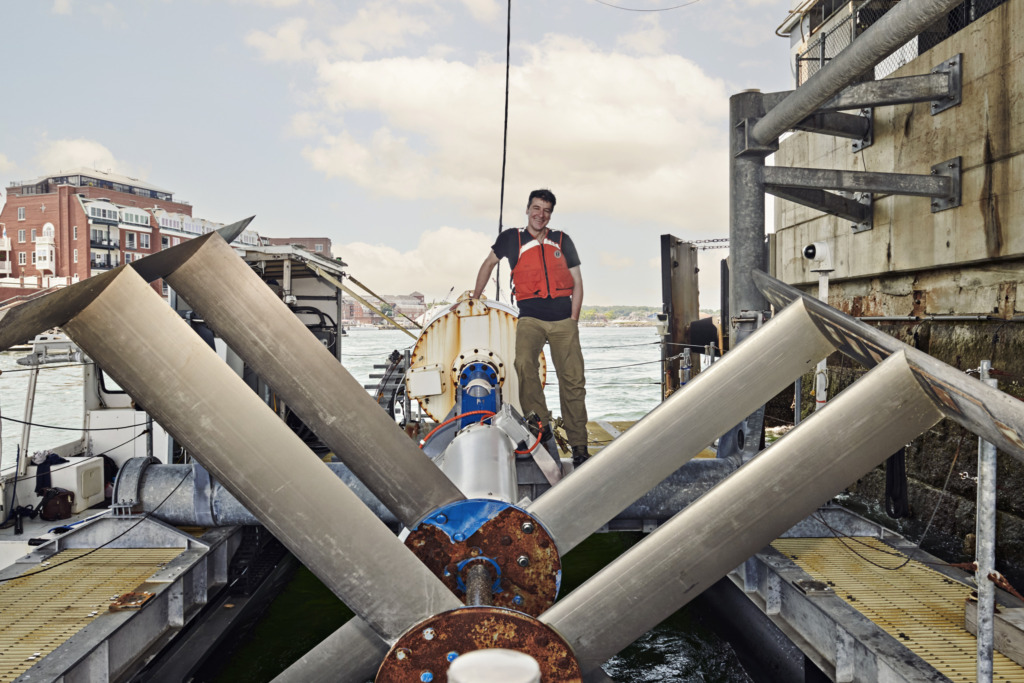
AMEC director Martin Wosnik on the Turbine Deployment Platform moored to Pier #2 at Memorial Bridge in Portsmouth, NH. Wosnik is standing on a 3.2m diameter 4-bladed crossflow turbine made by New Energy Corporation, Inc. of Canada, which has been deployed and tested in a variety of projects with scope varying from grid-connected and off grid operation, performance, loads and blade strain measurements to underwater acoustics and environmental monitoring, in collaboration with local partners and national laboratories.
Hawai‘i Marine Energy Center (HMEC)
The University of Hawai‘i at Mānoa has led HMEC (formerly HiNMREC) since its establishment in 2009. Its research has long focused on wave energy and OTEC —two resources ideally suited to Hawai‘i’s geography. The center is now expanding its efforts to support testing, community engagement, and education across the Pacific region.
HMEC’s most prominent test site is the Wave Energy Test Site (WETS), established by the U.S. Navy off the coast of O‘ahu. To complement WETS, HMEC is developing two new sites—Kilo Nalu Observatory and Makai Research Pier—as lower-energy, more accessible test environments. Onshore, the center has invested in upgraded laboratory capacity, including a wave flume with force sensors, a large linear actuator for PTO testing, and the Kilo Kai, a 27-foot research vessel used to support field deployments.
HMEC’s alumni have moved into marine engineering roles across the island and defense sectors. For example, Jesse Gray and Lauren Heslop joined Makai Ocean Engineering, and Cameron Morrow works at the Pearl Harbor Naval Shipyard. One PhD graduate has founded his own startup focused on wave energy-powered blue economy applications.
As a regional center for island energy solutions, HMEC engages with Pacific Island communities and supports students in cross-disciplinary training that includes engineering, ocean policy, and Native Hawaiian studies. Graduate students and faculty researchers are working on floating oscillating water column concepts and breakwater-integrated wave energy designs, as well as fixed and floating flap-type designs. Supported through the university’s Ocean and Resources Engineering Department, HMEC prepares students to address both technical innovation and community-centered energy solutions in remote and coastal environments.
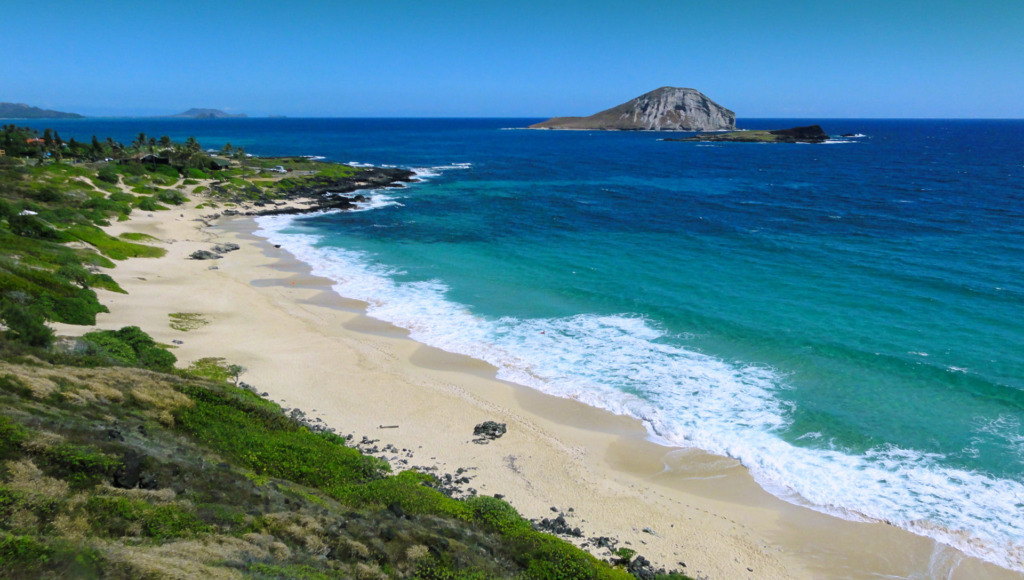
Makapuʻu Beach, Oahu, Hawaii: Photo credited to Cristo Vlahos
Pacific Marine Energy Center (PMEC)
Affiliated with Oregon State University (OSU), University of Washington (UW), and University of Alaska Fairbanks (UAF), PMEC was established in 2008 to support DOE’s marine energy program. Since then, it has evolved into a leading coordination hub for marine energy R&D in the Pacific Northwest, with strong ties to national labs, tribal communities, and international institutions.
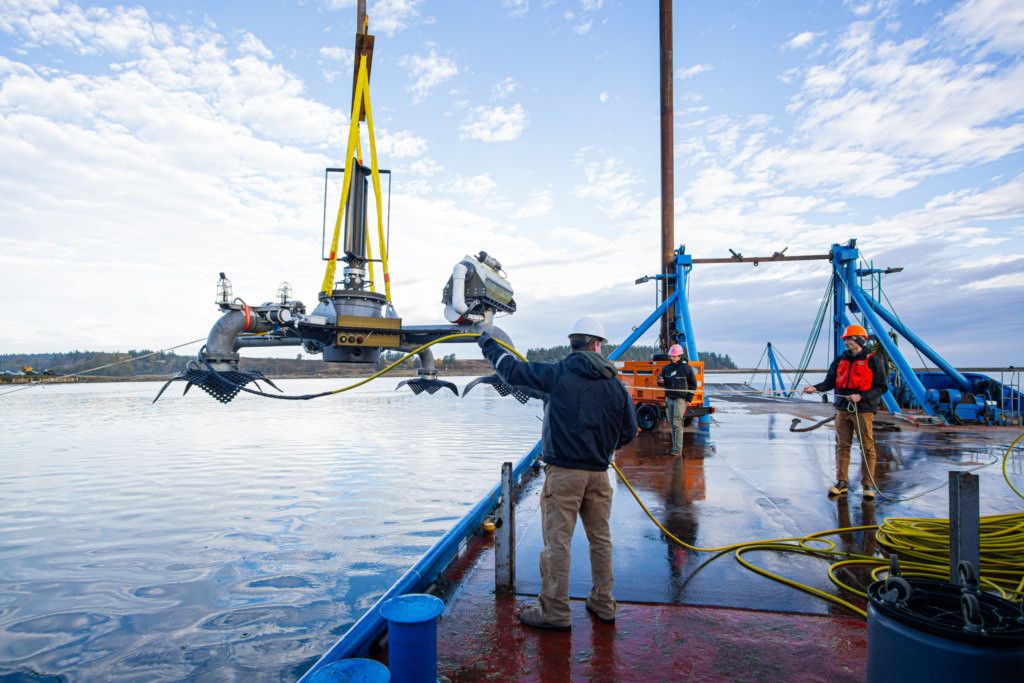
Lander Deployment: Photo by Chris Bassett / UW Applied Physics Laboratory Caption: PMEC engineers deploying Turbine Lander, a prototype marine current turbine, in Sequim Bay.
PMEC operates 14 facilities across its three universities. Among the most prominent is PacWave, a full-scale, open-ocean wave energy testing facility near Newport, Oregon. PMEC also operates the Hinsdale Wave Laboratory at OSU, one of the largest nearshore experimental facilities in the U.S., and the Harris Hydraulics Laboratory at UW, which supports tidal, riverine, and environmental fluid mechanics research. At UAF, the Tanana River Test Site provides real-world river energy testing in remote, cold-climate conditions.
PMEC has trained over 128 graduate students, many of whom have started marine energy companies or hold leadership roles at research labs and clean tech firms. Notable alumni include Moriel Arango, CEO of Bladerunner Energy, and Kelley Ruehl, an R&D engineer at Sandia National Laboratories.
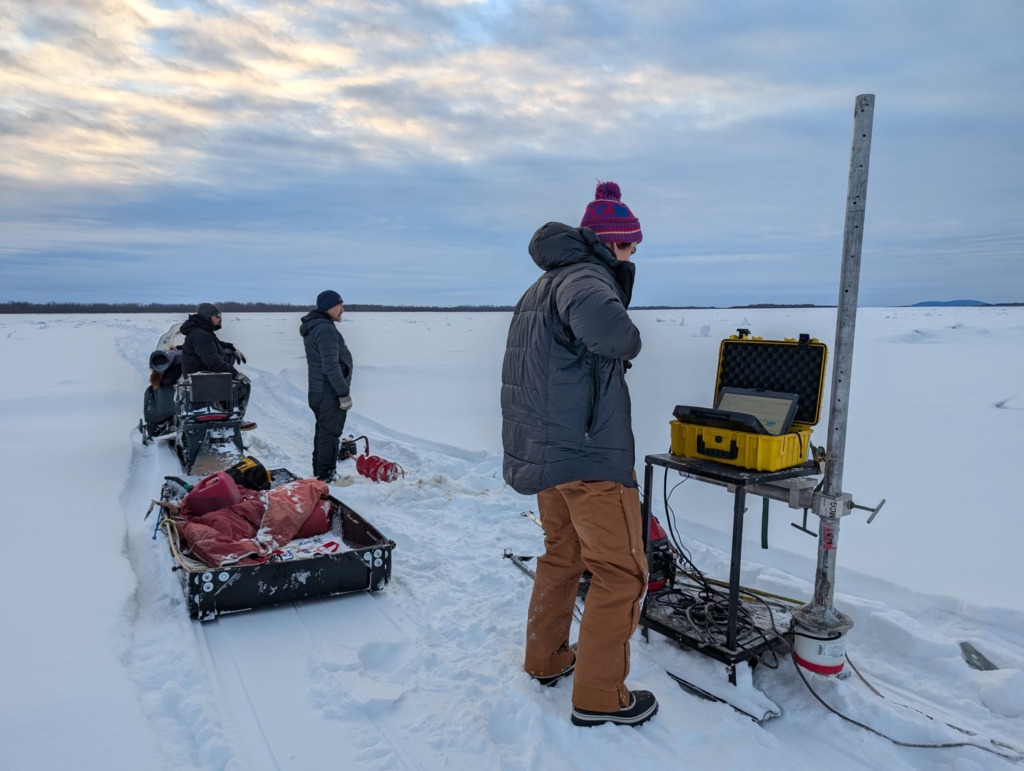
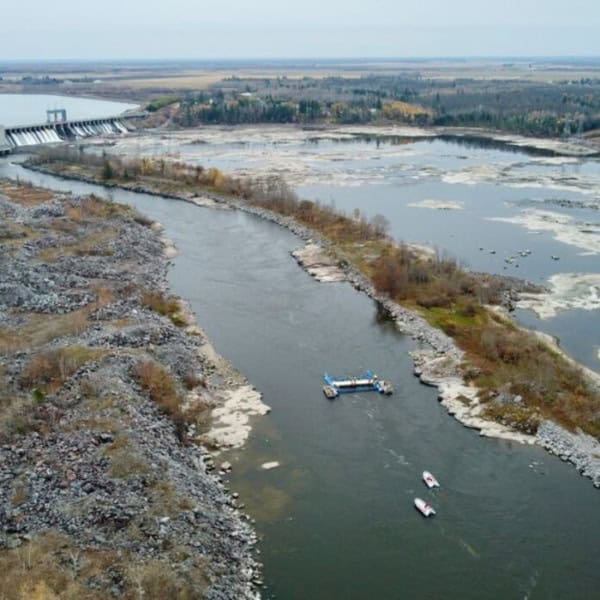
Under-Ice Testing Photo: Photo by Ben Loeffler / ACEP Caption: PMEC Researchers on the Yukon River in Alaska preparing to measure under-ice water velocities.
PMEC’s workforce development approach centers on hands-on research and deep industry collaboration. Students participate in internships, fellowships, and multi-institutional research teams focused on real-world challenges in marine energy. These experiences prepare them not just as engineers, but as system thinkers ready to address the technical, environmental, and community dimensions of ocean energy.
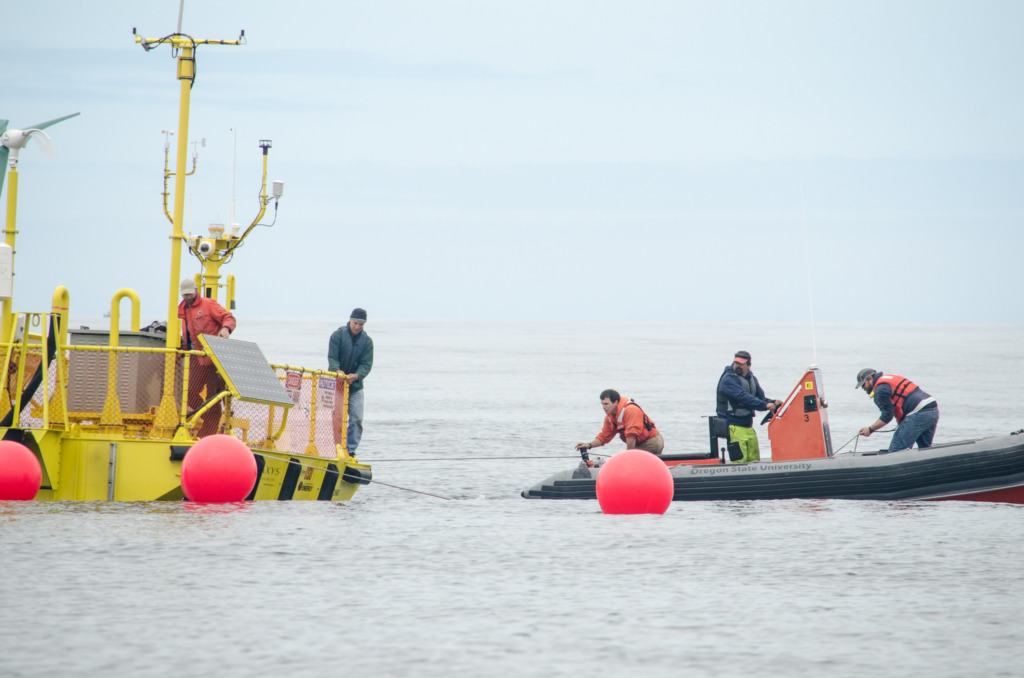
PacWave: Photo by Pat Kight. Caption: Oregon State University Ships Ops deploying the Ocean Sentinel at PacWave North.
Southeast National Marine Renewable Energy Center (SNMREC)
The Southeast National Marine Renewable Energy Center (SNMREC) was formally designated by DOE in 2010 and is hosted by Florida Atlantic University (FAU) in Boca Raton, Florida. It is the only NMEC focused on ocean current energy, taking advantage of its proximity to the Gulf Stream—a highly energetic and consistent marine resource just a few miles offshore.
SNMREC has supported open-water demonstration of marine current turbines and sensor platforms. Onshore, the center houses laboratories and a land-based dynamometer for performance testing of drivetrain components. SNMREC has also played a key role in advancing environmental monitoring strategies and permitting pathways for ocean current technologies.
SNMREC’s research and education programs are tightly integrated into FAU’s ocean engineering curriculum, which emphasizes systems design, hydrodynamics, and renewable energy. Students have participated in real-world deployments, sensor development, and interdisciplinary research collaborations with agencies like NOAA and the U.S. Navy. Many graduates have gone on to work in marine robotics, defense contracting, and renewable energy fields across the Southeast and Gulf Coast.
As the marine energy field grows, SNMREC continues to contribute to the U.S. innovation pipeline by training engineers who understand both the technological and regulatory complexities of ocean-based energy systems—and by helping unlock one of the country’s most underutilized, yet abundant, energy resources.
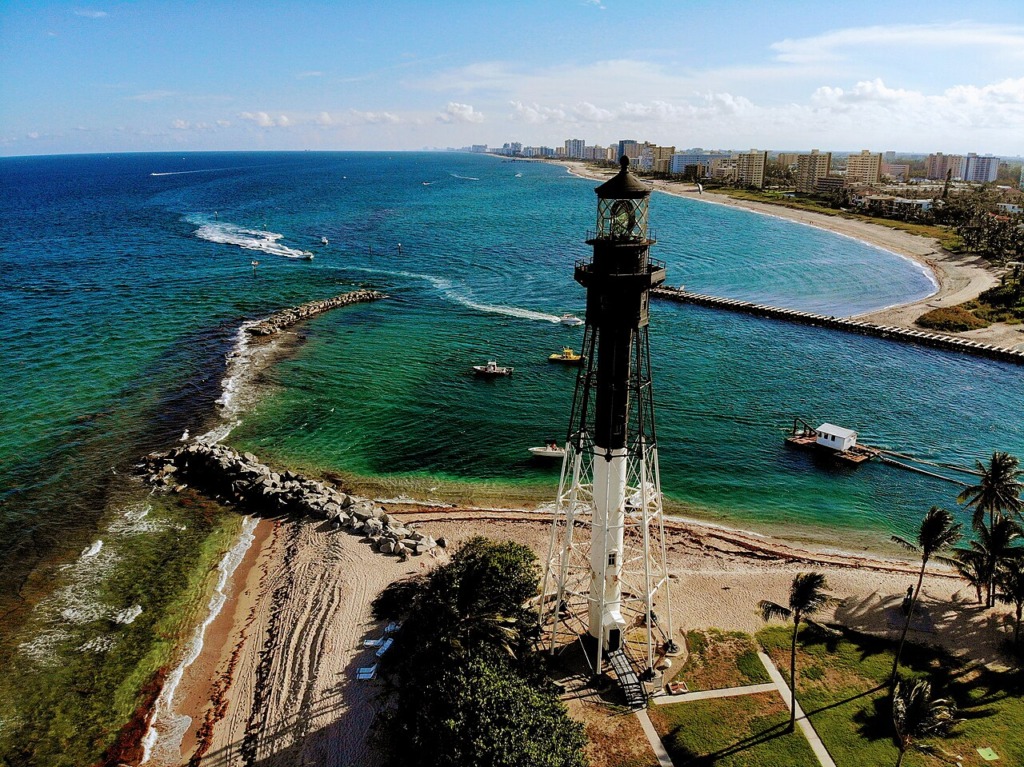
The Hillsboro Inlet Lighthouse in Hillsboro Beach, Florida: Photo Credited to Yanjipy – Wikimedia
Continued Investment in This Infrastructure is Necessary
The United States cannot lead in marine energy innovation without consistent investment in the infrastructure that supports it. The NMECs are precisely that kind of infrastructure—federally supported, regionally grounded, and nationally strategic.
Marine energy technologies must overcome tough challenges: harsh ocean conditions, high upfront costs, complex permitting and long development timelines. The NMECs lower these barriers by offering shared research infrastructure compliant with industry standards, technical expertise, and access to real-world test environments—all of which de-risk technology development and accelerate commercialization.
To sustain these impacts, reliable, long-term federal support is essential. Continued investment in the NMECs will:
- Advance technologies from lab to water more efficiently and affordably;
- Strengthen public-private collaboration, leverage expertise throughout the NMECs, and reduce duplication of effort;
- Support the growth of regional marine energy economies and supply chains;
- Prepare a skilled workforce ready to lead the ocean economy; and
- Keep U.S. companies globally competitive as other nations invest heavily in marine energy.
Recent federal support has expanded the NMECs’ capabilities. Consistent funding allows the centers to maintain infrastructure, retain expert staff, and build enduring partnerships with communities and industry.
The NMECs are not just test sites—they are critical national assets that connect U.S. innovation to real-world impact. With steady federal backing, they will help ensure the U.S. becomes the global leader in marine energy development and deployment.