
 Back to All
The One Bill Beautiful Bill Act – signed into law on Friday, July 4 – guarantees that both production and investment tax credits (and elective pay for public power) remain in effect for conventional hydropower, pumped storage, and marine energy through 2033. This means significant financial incentives are intact and should spur investment in both rehabilitation and new development work in water power. Now is the time for the industry to move forward on taking advantage of these tax credits/elective pay, as they work to contribute to America’s baseload electricity resources.
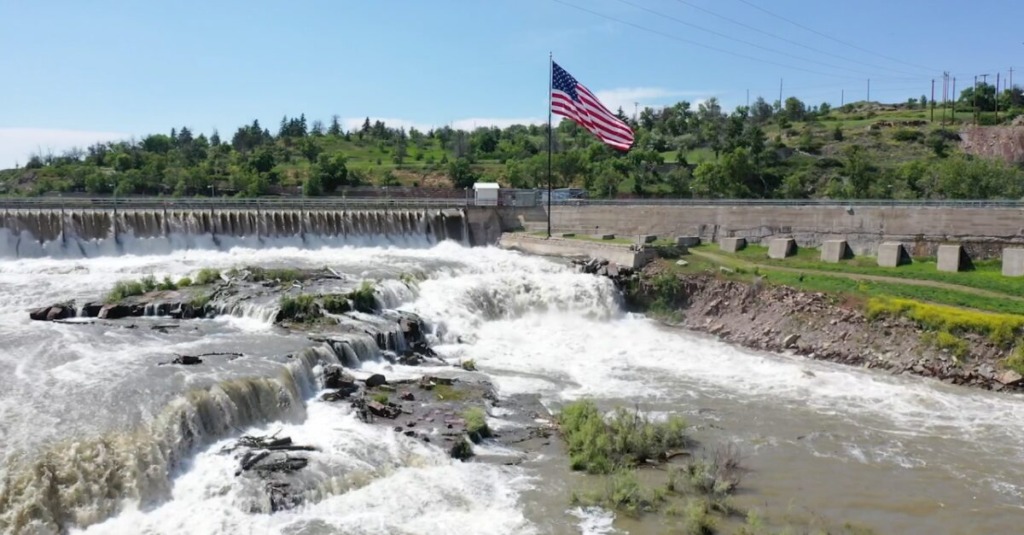
Photo of an American flag flying above NorthWestern Energy’s Black Eagle Dam.
THIS VICTORY TOOK COORDINATED ADVOCACY
In late May, when the House of Representatives narrowly passed the One Big Beautiful Bill Act (OBBBA), the U.S. water power industry faced serious concerns.
The initial bill language proposed steep rollbacks to the Inflation Reduction Act’s (IRA) tax credits, rendering said credits nearly unusable for hydropower. Given hydro’s long development timelines and the nation’s urgent need for resilient, domestically sourced energy infrastructure, the OBBBA posed a direct threat to continued hydropower growth.
In response, National Hydropower Association (NHA) launched a coordinated advocacy campaign, mobilizing industry voices through strategic outreach, op-eds, and constituent engagement tools like VoterVoice to make the case for hydropower’s critical role as a baseload energy source.
Thanks to these efforts, the final version of OBBBA—signed into law on July 4—includes several victories for water power:
- The Section 45Y (tax credit for producing electricity) and 48E (an investment tax credit for the cost of the project) tax credits were preserved in full
- Elective pay was retained for public power and co-ops
- Hydropower was explicitly recognized as a firm, baseload energy source
These policy wins not only secure full value of tax credit access through 2033, but also provide long-term certainty for facility modernization and new water power development. While additional implementation challenges remain—particularly around Foreign Entity of Concern (FEOC) compliance—the successful outcome of OBBBA proves the power of sustained industry advocacy and sets the stage for continued progress on hydropower’s federal policy priorities.

President Trump poses with House and Senate Republicans after signing the OBBBA.
BACKGROUND
On May 22, 2025, the House of Representatives passed OBBBA by a single vote, mostly along party-lines (215-214-1). The House version of OBBBA was immediately met with concern by the U.S. water power industry, as the language contained several ‘non-starters’ that, if enacted, would severely harm hydropower development.
The initial OBBBA text proposed curtailing the widely celebrated Inflation Reduction Act (IRA) tax credits in favor of a steep phase down of all clean energy technologies, with an exception for nuclear, while making the clean energy credits functionally unworkable for the hydropower industry. Considering hydro’s long build times, the proposed language would have impeded a country hungry for growth in domestic manufacturing and energy infrastructure.
NHA responded, executing a multi-faceted campaign to raise the industry’s voice by tapping into a network of passionate water power supporters. To help facilitate this effort an advocacy tool called VoterVoice was utilized. VoterVoice connects constituents to legislators with a couple of clicks while enabling crafted message sharing with the push of a button.
In the days following OBBBA’s House passage to the Senate, NHA identified several pathways forward for hydro’s priorities, including tying hydropower to amendment conversations around ‘baseload’ energy sources; baseload, in the context of OBBBA, refers to energy sources that can continuously operate without interruption.
To enhance the potency of this messaging, NHA crafted several strategic op-eds in national publications. Working alongside industry partners, including geothermal, the op-eds made the case that the Trump administration’s pursuit of an ‘energy dominance’ agenda is dependent on firm, baseload resources, which offer support to a nation seeking reliable and domestically sourced energy solutions.
With almost 40% of the non-federal hydropower fleet facing relicensing, and at risk of voluntary license surrender, the energy implications for unsupported hydro are dire. NHA leveraged hydro’s value statement – facilities in 48 states providing 24/7 reliable electricity to more than 25 million Americans – to highlight how crucial baseload energy sources cannot be overlooked during the reconciliation process.

Tennessee Valley Authority’s Raccoon Mountain Pumped Storage Project.
On June 20, 2025, the Senate released a budget reconciliation draft bill, demonstrating that the water power industry’s voice had been heard. In the updated language, hydropower was explicitly recognized as a baseload energy source – alongside nuclear and geothermal – and retained full eligibility under the IRA’s tech-neutral 45Y and 48E tax credits; specifically, hydro projects commencing construction by 2033 will qualify for 100% of the credit.
While the updates to the reconciliation bill were positive developments for industry, several demands remained:
- Restore exceptions from the Phaseout for Elective Payment to public power and co-ops, allowing these entities to take advantage of the credits for long lead time development technologies like hydropower and pumped storage.
- Create workable Foreign Entity of Concern provisions that acknowledge hydro and pumped storage do not have safe harbor tables.
- Preserve ‘start of construction’ language for long lead time technologies like hydro and pumped storage, as ‘placed in service’ could cause material harm to the industry’s ability to utilize the credits.
Following the draft, NHA maintained pressure on the Senate and continued to push industry to speak up about hydro’s priorities; Walter Rabe, CEO of Schnabel Engineering, rose to the moment in an op-ed published nationally in The Hill, arguing that Congress can not afford to overlook hydropower.
On June 28, little over a week after the Senate’s initial draft, an updated version of the tax reconciliation bill was released, and it contained good news for water power. In addition to the previous beneficial updates for hydro, the draft added the preservation of elective pay, enabling public power organizations and co-ops to take advantage of these credits – a decision that will help strengthen grids in rural areas across the United States.
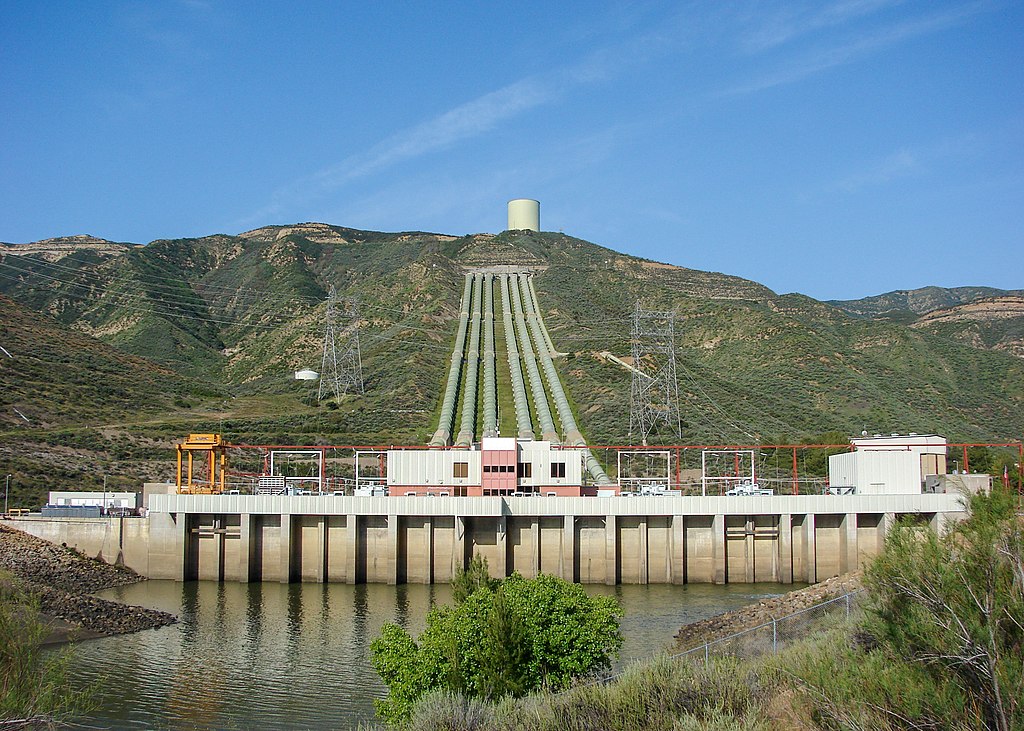
Castaic Pumped-Storage Plant in California.
LATEST UPDATES
The final OBBBA, unchanged from the version that passed out of the Senate on Tuesday, July 1, made its way through the House of representatives on Tuesday, July 2, and Wednesday, July 3.
After much debate and drama on the House floor, the House passed the final OBBBA by a vote of 218-214, with all but two House Republicans voting in favor of the bill and all Democrats voting in opposition.
President Trump signed the bill into law on Friday, July 4, at a signing ceremony at the White House with Congressional Republicans
The final enacted legislation includes many wins for water power, such as:
45Y Production Tax Credit – Full Value Retained Through 2033 ✅
- The 45Y production tax credit was retained for baseload energy production, which includes hydropower and marine energy, and remains unchanged from existing law (IRA circa 2022). Water power owners can still leverage the 80/20 Rule finalized this past January. This rule allows asset owners to repower generating units, and for the production from those units to be qualified as ‘new’ if 80% or more of the unit consists of upgraded components. This clarification, long advocated by NHA, ensures asset owners can confidently modernize existing facilities while accessing tax credits.
48E Investment Tax Credit (including storage) – Full Value Retained Through 2033 ✅
- The 48E investment tax credit was retained for baseload energy production, which includes hydropower and marine energy, and remains unchanged from existing law (IRA circa 2022). Water power owners can leverage the 80/20 Rule finalized this past January to access the ITC.
- The bill also retains the storage investment tax credit. This ITC will significantly help lower the capital costs for new and incremental pumped storage, passing those savings to ratepayers and investors.
Elective Pay – Retained ✅
- Elective pay allows “applicable entities” to claim the credits in the form of a rebate-like payment after a facility is placed in service. The bill retains the elective pay provisions of the Inflation Reduction Act, allowing public power utilities to take advantage of the credits for the first time. Additionally, elective pay allows for a significant portion of the water power industry to become eligible for tax credits – historically, the tax credits were only eligible for entities that filed a tax return; now, applicable entities are defined as publicly-owned companies and the Tennessee Valley Authority. This includes all current exemptions in statute and compliance with existing guidance for domestic content.
Transferability – Retained ✅
- The bill retains transferability for utilities, independent power producers, and developers, allowing them to transfer their tax credits to a third party for cash and encourages more investment and development.
Accelerated Depreciation – Retained ✅
- The bill retains the accelerated depreciation Modified Accelerated Cost Recovery System (MACRS), allowing assets to be depreciated over a faster 5-year timeframe, which enables faster utilization of the credits and greater savings on the investment.
Improved Foreign Entity of Concern (FEOC) Language – ????
- Requires taxpayers and applicable entities to certify to Notice 2025-08, where applicable, AND rely on supplier certification for the purposes of the material assistance requirements
- Material assistance thresholds begin for both qualifying facilities (i.e., hydropower and marine energy) and energy storage (i.e., pumped storage) projects that commence construction in 2026. Energy storage thresholds are stricter compared to qualifying facilities
- Levies a penalty on suppliers that provide false certifications
- Requirements surrounding Prohibited Foreign Entities, Specified Foreign Entities, and Foreign-Influenced Entities begin in 2026
- Directs the Secretary of Treasury to implement anti-circumvention language
- Most importantly, it did not reinstate the most problematic provisions of the original House bill
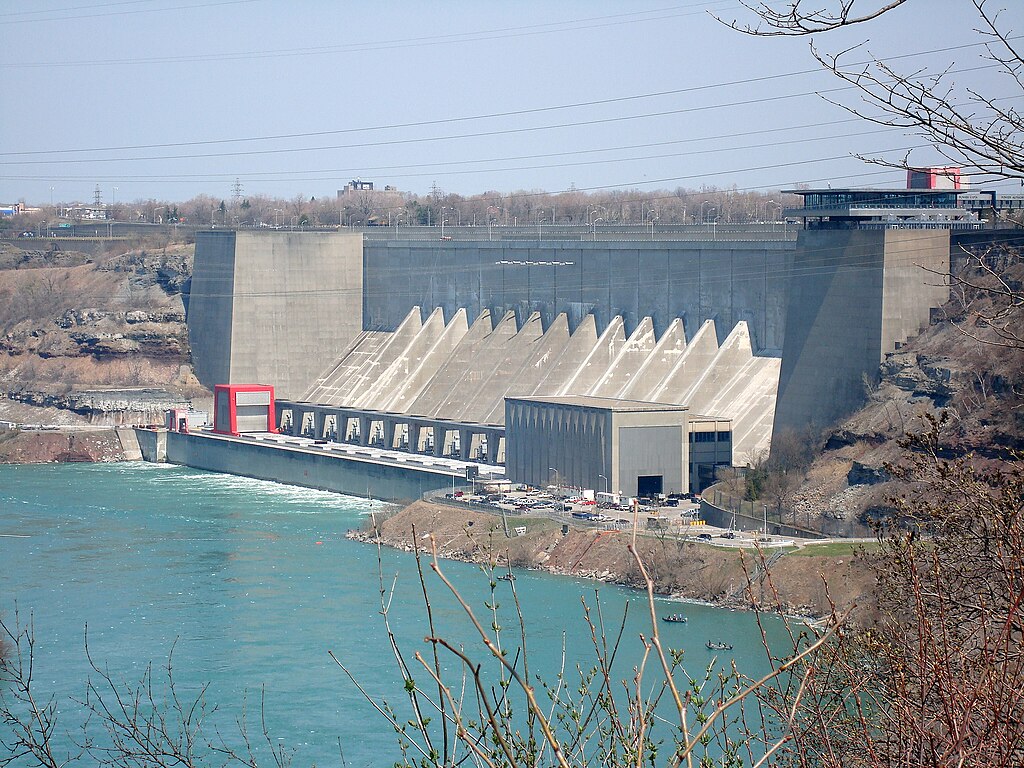
The Robert Moses Niagara Hydroelectric Power Station in Lewiston, New York.
NEXT STEPS
Now that the OBBBA has been enacted into law there will still be more work to do on the implementation of the new FEOC provisions.
NHA believes that Treasury will, among other issues, take a hard look at the beginning of construction/placed in-service safe harbor guidance either generally or specifically for those technologies. This will require robust advocacy from the industry with the Department of the Treasury, but the important work of maintaining the credit in its entirety will allow NHA time to sort them out.
Top of mind is working as quickly as possible with the Department of Energy’s Water Power Technologies Office and the National Renewable Energy Laboratory to develop safe harbor tables for the hydropower industry, ensuring that the water power industry can meet FEOC certification and domestic content guidelines.
Finally, while disappointing that the OBBBA process allowed no room for new tax credits or priorities, water power can take solace in our resounding victory on the existing production and investment tax credits, using the goodwill and momentum we’ve built to continue building support for the Maintaining and Enhancing Hydroelectricity and River Restoration Act.
Speaker Mike Johnson has already stated publicly that Republicans want to use reconciliation two more times during this current Congress. While it remains to be seen if Congressional Republicans can pull off such a feat, and we don’t yet know what the future policy in these reconciliation bills might include, the fact that they’ve succeeded once means it is quite possible that they can do it again.”